Showing posts with label creation. Show all posts

January 16, 2012

Labyrinth

At the start of this new year, I walked an outdoor labyrinth as a way of focusing on the path set before me – whatever it is – in the days of 2012. It was a cold day but not bitterly so, warmed some by the thin winter sunshine. The trees were all bare and I could see the wounds from the damaging October snowstorm. As I turned the circle around and around, I was sometimes facing forest and sometimes glimpsing a row of houses through a bare thicket.

The path of the labyrinth was edged by stone blocks and covered in pea gravel. I could see the footprints of others who had walked the same way, and I knew I was joined with and to them in prayer. Among those footprints were the tracks of a large dog and a small one, sometimes on the path and sometimes not. Did the dogs walk with their owner or did they come on their own? I also saw the prints of deer in several places, and some small tracks that I could not identify – maybe a raccoon.

I loved the act of walking the labyrinth with the wild things. It was as the psalmist said: “Let everything that breathes praise the Lord!
Praise the Lord!” (Psalm 150:6) There we were, all of us creatures made by the breath of God, walking and praising in our own God-given way – me and the dogs and the deer and the others.

March 21, 2011

Sweetness and Light

On Saturday, my brother opened the bee hive. The bees have ended their winter’s hibernation and are back out, visiting dandelions, forsythia, clover, and vetch. The hive has the left-over honey from last year, what they did not need to see them through the cold. At the end of the fall, when almost everything had stopped blooming, the bees fed on basil blossoms. And the honey they made from those end-of-season flowers is lightly sweet and the color of summer sun. We uncapped the honeycomb, each cell a miraculous perfect little hexagon, and ate the honey in the yard, even as the bees flew off in search of the nectar of another spring.

February 4, 2011

Surrender

One of my neighbors has stuck a pole with a white flag on it in the snow bank in front of his house. That pile of snow must be at least eight feet high. We live in a frozen, lunar-like landscape. Cars creep out of driveways and intersections, unable to see what might be coming. Pedestrians walk with tiny, mincing steps over icy paths. The wind blows through the trees and makes a brittle, tinkling sound as it rustles ice-coated branches and twigs. Buildings are falling in from the weight of the snow and ice. We have never had winter like this. Schedules are disrupted, school vacation is cancelled, it is cold all the time. We are all ready to surrender. But I remember that I planted garlic in the fall, and it is waiting somewhere under all the snow to sprout. The daffodil and tulip bulbs are there, too. And the chipmunks, in hiding now, but resting up to wreak havoc on the lawn and eat the bird seed and burrow under the walkway. Everything green is on hold, but it is there nonetheless. W just have to have faith: “the assurance of things hoped for, the conviction of things not seen” (Hebrews 11:1).

Meanwhile, more snow is forecast for tomorrow…..

January 8, 2011

Snow Day

It is January in New England. We should not be surprised that it is snowing, but we are. Somehow we traipse through winter thinking that we are in control and so we do not expect the disruptions of weather. Well, it has snowed, traffic has been snarled, events have been cancelled. And the world is beautiful. This snow is soft and fluffy, and it is piled on tree branches and bird feeders and porch rails. The snow muffles noise, and the usual sounds of hurrying are mostly silenced. People are out shoveling or pulling sleds, or inside with hot chocolate. And part of what is beautiful about the snow is that it makes us pause. A snow day – when you are in the right place – is a blessing. A snow day is a way for us to obey the holy command: “Be still.” Perhaps we ought to declare a snow day for the soul every now and then, regardless of the climate.

June 28, 2010

Vegetable of the Week

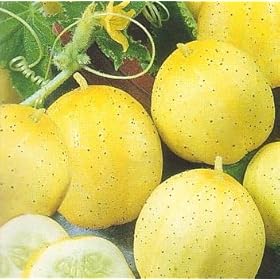
It is round and yellow, small enough to fit in the palm of my hand. It looks like a lemon with funny little spines on it. But when I slice it open, the secret is revealed: It is a cucumber! It has the transparent seeds, the cool pulp, the taste and clean smell.

The great naturalist, scientist E. O. Wilson, has long been a proponent of biodiversity. I think he is mostly thinking about creatures, not vegetables, but I'm sure he would appreciate the lemon cucumber. I don't know what benefit there is in the world having a round yellow cucumber, except that it is a beautiful thing. And maybe that is all the justification that needed.

June 6, 2010

Beulah Land!

Last Sunday, we sang an old Southern hymn, "Dwelling in Beulah Land." You won't find it in the hymnals in the kind of churches I attend in Connecticut! The chorus has stayed with me all week:

I'm living on the mountain underneath a cloudless sky,
I'm drinking at the fountain that never shall run dry,
O yes! I'm feasting on the manna from a bountiful supply
For I am dwelling in Beulah Land.

There is one place in the Bible, Isaiah 62.4, that speaks of Beulah Land. It is a powerful statement of the promise of God's love fulfilled in the land itself, in the place of grounding, where the people find their life and livelihood. The prophet reminds them: "You shall no more be termed Forsaken, and your land shall no more be termed Desolate;but you shall be called My Delight Is in Her, and your land Beulah (Hebrew for Married); for the Lord delights in you, and your land shall be married."

It is odd to think of the land being married, but the old hymn explains the meaning. It is to come to a place of abundance and joy, a place where all that is needed for life is present in overflowing measure. Maybe Beulah Land is all around us but our culture has become so soaked with fear and greed that all we see is scarcity. It is a fact that there is enough food in the world for everyone to be fed, and yet countless numbers die of starvation every day.

I was in my own Beulah Land when I sang the hymn. In the few days I was there, different people showed up with various little gifts: a cabbage freshly cut from the garden, a dozen eggs right from the chickens, potatoes and onions newly dug, squash and blueberries just picked. It was a bountiful supply of manna and we indeed had a feast, several actually!

And the first verse of the hymn starts with these words: "Far away the noise of strife upon my ear is falling." I did, in those few days, feel that the noise of the world's strife was far away; not absent, but not overwhelming either. To live in the place of abundance is to be able to be present in a world that is far from perfect and still to know that God's intention for all the earth -- people, animals, plants, and everything -- is only good, always shalom. It is to remember that the whole universe is, indeed, as Brian Swimme has said, "bottomless vaults of generosity."

May 2, 2010

Spring!

The flowering trees are like slightly wild party girls on their way home from a raucous night out. They are dressed all in pink and white, but now starting to look a little tattered. They are strewing confetti all around them. The petals litter the sidewalks and the gutters, mixing with the sand left over from winter, looking almost like snow, except for the pink and the rose color.

The peas, on the other hand, are not at all like these extroverted sorority girls. They poke their little green heads up out of the dirt, cautious and timid, as though they are not quite sure what is waiting for them. No wild abandon for them!

The hosta unfurls itself, and the lettuce and the spinach and the azaleas applaud. The world is very beautiful, and there are more shades of green than the eye can take in, more than the heart can count.

In the beginning, God saw that it was good, and, by God, it still is!


October 18, 2009

Fall


It is cold and rainy, a dark and dreary day. But when I look out the window by the rocking chair where I pray, this is what I see. The maple seems to glow in the afternoon gloom. This must be what the poet meant when he wrote about "uncreated light." I know it is summer's last gasp, but what wonderful thing -- to go out in such a blaze of glory!

August 24, 2009

A Tiny Taste

from Father Joe: The Man Who Saved My Soul by Tony Hendra, page 63:

It took my breath away: the curve of the great path, the contrasts of raw earth against rushing cumulus, of tumbled old stone against tall young grass, of leaf-speckled oaks against the sea. A very different landscape than my placid, green-shaded Hertfordshire; this was impeccable and classic, every element of natural beauty in exact harmony, a foretaste of perfection, an amuse-bouche of Paradise.


I confess: I like to watch the Food Network. That is where it have learned that an amuse-bouche is a wonderful little dish that is only one bite. It is meant to tempt and delight the palate, similar to but not to be confused with hors d'oeuvre. This is a tidbit, often tiny, served as a free extra to keep you happy while you are waiting for your first course to come. It gives you an idea of the chef's approach to cooking and the restaurant's attention to your appetite. It is literally a happy mouth.

What an amazing way to think about this beautiful earth: a tidbit, just a taste, given to us now to show us God’s approach to all of eternity and God’s attention to our needs. As the psalmist says: O taste and see that the Lord is good (Psalm 34.8a).

March 1, 2009

Fasting for Lent

The psalmist says that “the earth is the Lord’s” but we have surely lost sight of that. We live as though the planet is ours to dispose of – and that is all too often just what we are doing. What if we came to see our home in the universe as the gift God meant it to be? Would we live differently?

The theologian Sally McFague thinks we would. She has offered a new way of thinking about the world and about God, in her work on the universe as the body of God. This incarnational metaphor calls us to a new kind of relationship – with God, incarnate in Jesus, and with our world.

In some Christian traditions, Lent is a time to give up something, a time to fast. One group of Christians has created a carbon fast, an intentional approach to the care of the world during the days of Lent. Each day’s fast is a small discipline; nothing is so great that I cannot do it. And it calls me to consider the preciousness of life; it reminds me that everything is a gift from God; and it creates in me an awareness of the duty of love I owe to my brothers and sisters who call this planet home.

It makes so much more sense to my spirit than giving up chocolate for forty days….

February 1, 2009

Spring is coming!


Some doubt the truth of global warming. After all, we have had one of the coldest, snowiest Januaries ever. But yesterday, at the bird feeder right outside my dining room window, there was a robin. I cannot recall seeing one here this early. And he (or she) was right there -- up close, in full feather, and beautiful. I wonder if the bird felt out of place in this frozen, icy wasteland, where the only accessible food is that supplied by someone who goes to the store and buys bird seed. Does that bird wonder what happened, why the seasons, the warmth, the wind, whispered "Go home. Go home," far before it was really time to fly? I don't know why the robin is here, but I do know that he is beautiful. I have never seen one so close up. I have never seen one in the depth of winter. But here he is and his presence is the promise of spring, of new life, of hope. So...thank you, Robin, for coming and renewing my faith, restoring my hope, and proving that there is and will be spring!

January 3, 2009

Paradise with People?

My book group is reading "The World Without Us" by Alan Weisman. The premise of the book is summed up in the title: what would happen to the earth if people suddenly disappeared. The author describes, in sometimes excruciating detail, the way human-made structures would quickly fail. He also tells of the effects of humans on the air, soil, and water of the planet. And he explains how the earth would begin to revert, heal, restore -- you pick the word -- if we were no longer here.

I've known in a small way what the book proposes all my life. On our farm, cleared land left for only a season or two quickly begins to sprout up with all kinds of things. The blueberry farm where I worked all through high school, acres and acres of cultivated bushes yielding a good crop and employing the neighborhood for three or four weeks each spring, is now all grown up in pines. The barn where we packed the berries is probably fallen down but it is hard to know since the road through what was once field is now completely gone. Places on the farm where timber was cut only fifteen years ago are again forest. For the farmer, maintaining the human enterprise is constant work, so it is not surprising to me to read how quickly nature, of a non-human nature, rushes in.

In November, I traveled in New Zealand. This is one of the places the book discusses. Because it is a remote set of islands, New Zealand existed without humans for a very long time and it is relatively easy to figure out what life was like there before "we" came. One thing that happened with the coming of humans was the introduction of other animals. Stoats, rats, and possums found easy pickings in a place where the only native mammal was a small bat. Centuries of evolution had produced flightless birds, some of which became easy targets for predators, both animals and people. The signature kiwi was almost eradicated; the giant moa was.

There are some small islands just off the large South Island that are being restored to their prehuman state. The rats and possums have been trapped, and naturalists keep constant vigil to see that no new predators are reintroduced. We visited one of those islands, and it was incredible. The whole island is a rain forest, lush and green, with giant ferns reaching up to the sunlight. The most amazing thing was the birds. They are almost tame. I sat for a while beside the path, and all kinds of wild birds came and gathered around, seemingly curious but also astonishingly unafraid. It was a powerful experience to see them up close that way, looking at me with interest, just as I was looking at them.

Many of those on the trip talked about these places as paradise; we observed that walking through these primeval forests must be what it was like to walk in the Garden of Eden. Of course, in Genesis story, paradise is lost soon after the humans arrive. But I want to believe that paradise with people is still possible. Maybe one of the unanticipated effects of all this financial woe will be to turn us away from the kind of mindless overconsumption that has destroyed so much of the earth, attacking like a predator introduced into a trusting, unsuspecting ecosystem.

New Zealand and its birds are very beautiful. So are the doves and juncos and cardinals and sparrows cavorting in the snow under the feeders in my back yard. And I do believe that paradise is possible.

November 30, 2008

Summer's Shroud

Yesterday I finished cleaning up the garden and putting away all the summer yard furniture. The table and chairs on the porch were marked by the leaves that had fallen. They are gone now, but they have left their imprint behind. Like the Shroud of Turin, the surfaces still bear the shape of that which was alive and green. Look closely and you can see summer -- even though it is snowing this morning and another kind of shroud will soon wrap the earth. But the promise is in the images that remain, and the promise points to another summer yet to come, to the life of the leaves that remains behind now to nourish the earth with rich humus, the promise of summer waiting underneath the wrappings of winter.

February 21, 2008

Refracted sunrises and sunsets

I went out into the cold dark night to see the lunar eclipse. It was very beautiful -- the full moon in shadow, dark but somehow glowing with a kind of dark red-gold color. On NPR's All Things Considered, Kelly Beatty, executive editor of Sky & Telescope magazine, had said that it would be "a pale ruddy orb, like a glowing ember in the sky." He said that the glow is caused by "sunlight leaking through the earth, kind of like all the sunrises and sunsets simultaneously allowing a little of their light to be refracted onto the moon’s surface." It was quite amazing to see. And it is also amazing to think of all the sunrises and sunsets of the whole earth being mirrored in the moon, a whole day's worth of earth's light reflected back to us. When I was a little girl, Mama used to get me up to watch eclipses and unusual alignments of planets and stars. I remember sitting on the front porch on a dark cold morning, wrapped in a big blanket, watching Venus shining huge and low in the sky. Last night, outside watching the moon, I had the same feelings of awe and wonder as I did then (as the psalmist did, too) when I considered the heavens, the work of God's fingers, the moon and the stars that God has ordained.

February 11, 2008

First Sunday in Lent

Of Trees and Gardens

Genesis 2:15-17; 3:1-7
Psalm 32
Romans 5:12-19
Matthew 4:1-11


Once upon a time, at the beginning of time, the whole world was like a garden. It was so beautiful, planted and populated with every good thing, fresh and fragrant, because it was God’s garden. God created the garden for us, and it was God’s delight to be there with us.

The garden was full of trees, trees of all kinds: shade trees and fruit trees and flowering trees, trees bearing nuts and spices, quaking aspens and weeping willows, elms and oaks and evergreens. And in the middle of the garden, God planted a special tree, one of a kind. It was the tree of life. I imagine it as a big and beautiful tree, high and lifted up, with branches spread wide, and deeply rooted, too, firm and faithful, established there for all time. And it must have been that everything there was centered around this tree of life, and the life of the tree flowed out to everything else. It was as God intended: life in the center, goodness in abundance.

There were many trees in the garden and they were all meant for us, all of them except one. Somewhere in the garden, there was a tree called the tree of the knowledge of good and evil. God planted the tree in the garden where we lived but that tree was reserved for God alone.

We lived in that garden for a time, back when time was new, and we had everything we needed. And God would come and walk with us in the cool of the day. We lived with all creation and with God in perfect harmony. We even lived with each other in perfect harmony – that is part of what made it seem like paradise. It was so good, but since it was all we knew, we didn’t know there was anything so special about it. It was just the way the world was. It was just the way God meant it to be.

But it didn’t last. We began to have some stirrings, some longings, some cravings. It is hard to say where they came from exactly. They sneaked up on us somehow, like a snake in the grass, and pretty soon we became convinced that it wasn’t enough to be made in the image of God, to be like God. And it wasn’t enough to walk with God in the cool of the day, to be with God. It wasn’t enough to be like God, to be with God; we wanted to be God. So we reached out and seized that which was reserved for God alone. We claimed for ourselves the knowledge of good and evil.

And we scattered the seeds of that knowledge through the whole garden. And good sprouted up, yes, but so did evil. And somehow the evil has grown thicker and more pervasive, like briers in a garden, growing up so thick and fast that the tender green goodness almost gets choked out. And pretty soon the world doesn’t even look a garden at all any more. It looks like a wilderness. It is a dangerous place; it is a threatening place; this place where we live, this place where good and evil grow up together and become so entwined we cannot even tell them apart any more. And we feel alone in the wilderness; we are afraid of everything. We even hide ourselves from God.

And the world has been this way for so long that the pure green goodness of the garden seems like a fairy tale, a myth. We can no longer remember how it was when the world was new. We can’t even imagine what it was like we walked with God. We have a hard time believing that it was ever so. But God can remember it, God can envision it, God is faithful still. And deep in God’s heart, in the place where memory and vision and faithfulness flourish, God’s original intention for the world has not changed: life in the center, goodness in abundance.

And maybe the word that best describes all this is love. There is really no other way to explain why God just doesn’t give up on us. But God doesn’t. And God has gone to extraordinary lengths to show us what this love looks like. In order to reach humans who want to be God, God becomes human. And this human God, this God-man, the one we know as Jesus, walks into the world’s wilderness. He comes to us where we are, as we are. And just like all the rest of us, he too possesses the knowledge of good and evil. But unlike all the rest of us, he alone is not distracted by that knowledge; he is not corrupted by it. And because he has dwelled for all eternity in the realm of God, in the place where the garden still grows green, he knows the heart of God. He understands God’s intention for all creation. He understands it and he embodies it. He is life and he is love. And all that is good in creation is centered around him. And the life that is in him flows out to everything else. It is just what God intended: life in the center, goodness in abundance.

And because he is somehow like us, it seems possible for us to be somehow like him. It seems possible for us to resist the temptation to be other than who God intends us to be. It seems possible for us to resist the temptation to use our gifts for our own good, rather than the good of others. It seems possible for us to resist the temptation to exchange the power and glory of God for the sparkly glitter of the world. It even seems possible to see the world as God always intended it to be: life in the center, goodness in abundance. And if we are paying attention, we can even catch a glimpse of the garden.

And maybe that is what we are called to do in these forty days of Lent, these forty days of wilderness. Maybe we are called to pay attention to the places where the garden is breaking through. At the end of these forty days, there will be another kind of garden, and there will be another tree. Those who see only the wilderness, will look at it and think that it is a tree of death. But those of us who have caught a glimpse of God’s garden will come to the tree and know it as it really is: rooted and grounded in love, firm and faithful, established here among us for all time; and high and lifted up, with arms spread wide. We will come to the tree and know that it is the tree of life. And Jesus will be waiting for us, there in God’s garden – as it was in the beginning, is now, and shall be forever more. Amen.


(c) Martha C. Highsmith 2008


January 12, 2008

The Frozen Labyrinth

No one shoveled the snow from the labyrinth but it has melted here and there, so that part of it is exposed and part is visible under the thin crust of snow. Most of it is hidden and the path is hard to find. But I walk it anyway. Others have done that, too, and there are footprints frozen in the snow. Leaves have fallen and there are little melted impressions where they lie, as though there is some of the warmth of summer still in them somehow. I cannot see the turnings and so I make up my own way around. I follow the bricks and stones where I see them and then I go on my own over the snow and ice that covers the rest. I cannot see the path but it is there nonetheless. And I remember these words from somewhere: “Traveler, there is no road. The way is made by walking.” And so I walk, making a way, following a path that I cannot see. And I realize that the place where the path is hidden is the place of shadow. The trees have kept the labyrinth out of the sun. And that must be part of what the holy mystics mean when they speak of the dark night of the soul. It must be that the darkness of the shadows hides the path, makes it impossible to know where the way is. But the absence of knowledge, the absence of vision, is not the absence of the path. The way is there all the time. And if I wait until the snow melts, I will miss this walk of peace. The snow will be gone in a matter of months but I am here now. And so I walk, making my way, trusting that the path is unfolding under my feet whether I can see it or not. I am walking in faith.

December 17, 2007

This takes the cake!

Where I live now, the sugary coating that goes on a cake is called frosting; where I grew up, it is called icing. Either way, I was thinking about it this morning, and both words are appropriate descriptions for what I woke to see. It has been a long time since I made a seven-minute icing, but the world looked just as though God had spread a spatula of it across everything. It had snowed and then sleeted, and the whiteness was coated with a shiny smooth layer. It was beautiful. The sun sparkled on it like the candles on a birthday cake. The whole world looked as though it had been decorated for a celebration. Maybe that is why people love the idea of snow for Christmas. All that frosting and icing is a reminder that we are preparing, and being prepared, for the ultimate birthday party!

December 16, 2007

Snow Day

This winter that was so slow in coming has arrived with a vengeance. It snowed on Thursday and pretty much shut down the whole area. Traffic stood still for hours. It was so bad that the mall closed around suppertime – and Christmas just around the corner of the calendar. As I drove to work in the morning, the world was brown and even still green in some places. But all that was hidden in the afternoon, covered with a thick blanket of snow. And now it has snowed again, mixed in with sleet and freezing rain. It is cold, windy, and icy. Lots of churches cancelled their services this morning. We had worship and it was really nice. It would not be quite Advent without this Sunday of joy, the pink candle, and Mary’s song. And I wonder what all those pastors did with their snow day. Did they have coffee at the kitchen table and read the Sunday paper? Did they go back to bed and sleep through what would have been the call to worship and confession? Did they pray or listen to carols or read a book? Did they have trouble deciding how to spend this day off? A snow day is a rare gift, and I hope all those ministers who had one today were as excited about it as if they were eight years old. I hope it was a Sunday of joy for them, too.

December 9, 2007

Snow and Roses

The first snow of winter fell while the roses of summer were still blooming – one season intruding into another, each beautiful in its own way and the overlapping of the two more lovely than I could have imagined.

Photo by Jane Highsmith

November 30, 2007

Letting Go

These are truly the last of the tomatoes. The cold has made them a little shriveled, but it is a miracle to be finding them at all at this late date. They have hung on and on. The leaves on the trees seem reluctant to fall this year, too. On my street, there are trees still wearing the green of summer, although it seems a bit faded now and certainly out of place, like a woman going out to shovel snow decked in a summer sun dress. There are small forests of oaks in reddish-brown, with pounds of leaves still high overhead. We have raked away the obedient ones that kept to the assigned schedule. But the recalcitrants remain firmly fixed to their branches, hanging on tight. It will snow on them soon. They will be weighed down by ice, rattled by the cold wind. They will put a heavy strain on the limbs and there will be damage and loss as a result of their stubborn persistence. They should have let go a long time ago. And I wonder a little what will happen next spring when it is time for the new leaves to sprout. Will the old ones still be clinging to the branches, blocking the emergence of the new? Will the refusal to let go of what has become old and faded distort what might have been?
It is easy for me to see how out of season the tomatoes and green leaves are -- harder to see what hangs on in my life until it threatens to become a liability. That which is fresh and green, with the sweet taste of new, is so hard to let go, even when it has become faded and shriveled, even when its time has passed, even when what has been risks damaging what is and what might yet be. That is true for the garden, for the trees, and for my soul.