Showing posts with label green. Show all posts

January 31, 2012

Sage Advice

The meteorologists and scientists tell us that we are experiencing climate change. It is hard to discount their advice this year: the temperature tomorrow is forecast to be in the 60's -- this, the first day of February in Connecticut. We are cooking our climate, and the effects are one year of unbelievable snowfall followed by this year of June-uary.
This weekend I made pesto with sage that I picked that day from my kitchen garden. I still have collards and kale growing. My garlic is coming up. The vegetables do not know that it is winter. they are growing and flourishing in this odd New England January. And I am eating pesto fresh from my own garden in a time when all should be covered in a deep blanket of snow.

P.S. The pesto was wonderful and I made fresh pasta to go with it.

January 23, 2011

Another kind of jet lag

There is a form of jet lag that does not involve time zones. It is what happens when you hurl yourself from one climate to another. Your watch stays the same but everything else is out of sync. I got on a plane in the middle of winter. The snow was piled up higher than my head in places. Everything was a brittle and blinding white. A few hours later, I stepped into summer. The air was warm, and I was surrounded by green -- soft, lush green. Instead of bare brown limbs, there were palm trees overhead, and flowers blooming, orchids being sold by the side of the road, fountains playing like music. It was as much a shock to my system as crossing into another time zone. And in a way it was just that: crossing from one season to another. So I have let my frozen bones soak up the warm. When I step off the plane, it will be maybe almost 20 degrees, and there will be no palm trees….

June 28, 2010

Vegetable of the Week

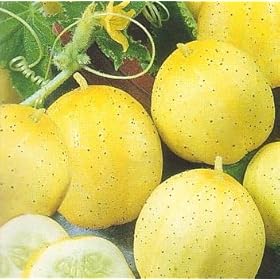
It is round and yellow, small enough to fit in the palm of my hand. It looks like a lemon with funny little spines on it. But when I slice it open, the secret is revealed: It is a cucumber! It has the transparent seeds, the cool pulp, the taste and clean smell.

The great naturalist, scientist E. O. Wilson, has long been a proponent of biodiversity. I think he is mostly thinking about creatures, not vegetables, but I'm sure he would appreciate the lemon cucumber. I don't know what benefit there is in the world having a round yellow cucumber, except that it is a beautiful thing. And maybe that is all the justification that needed.

June 25, 2010

Pesto!

I made the first pesto of summer, with basil that I brought home from our farm in my suitcase. It has a lot of garlic -- so I can only eat it when I am going to be alone. It has the sharp, bright greenness that is both a color and a flavor. If my garden yields even half as much as my mother's, I will have lots to put in the freezer. Then, in the depth of winter, I will take some out, cook a little pasta, and have a taste of summer.... all by myself!

March 7, 2009

An Unintentional Virtue

I did not mean to reduce my energy use during Lent as much as has turned out to be the case. But my dryer finally quit working, and the cost to have it repaired is too much to spend on an old appliance. So I brought in my summer clothesline and set it up in the basement, and I have been hanging up the wash. It doesn't come out quite as nice as if it were dried outside, but the sheets especially have a nice smooth crispness that they don't get from the dryer. I will buy a new one soon, but for now, I am doing just fine with this.

March 1, 2009

Fasting for Lent

The psalmist says that “the earth is the Lord’s” but we have surely lost sight of that. We live as though the planet is ours to dispose of – and that is all too often just what we are doing. What if we came to see our home in the universe as the gift God meant it to be? Would we live differently?

The theologian Sally McFague thinks we would. She has offered a new way of thinking about the world and about God, in her work on the universe as the body of God. This incarnational metaphor calls us to a new kind of relationship – with God, incarnate in Jesus, and with our world.

In some Christian traditions, Lent is a time to give up something, a time to fast. One group of Christians has created a carbon fast, an intentional approach to the care of the world during the days of Lent. Each day’s fast is a small discipline; nothing is so great that I cannot do it. And it calls me to consider the preciousness of life; it reminds me that everything is a gift from God; and it creates in me an awareness of the duty of love I owe to my brothers and sisters who call this planet home.

It makes so much more sense to my spirit than giving up chocolate for forty days….

February 1, 2009

Spring is coming!


Some doubt the truth of global warming. After all, we have had one of the coldest, snowiest Januaries ever. But yesterday, at the bird feeder right outside my dining room window, there was a robin. I cannot recall seeing one here this early. And he (or she) was right there -- up close, in full feather, and beautiful. I wonder if the bird felt out of place in this frozen, icy wasteland, where the only accessible food is that supplied by someone who goes to the store and buys bird seed. Does that bird wonder what happened, why the seasons, the warmth, the wind, whispered "Go home. Go home," far before it was really time to fly? I don't know why the robin is here, but I do know that he is beautiful. I have never seen one so close up. I have never seen one in the depth of winter. But here he is and his presence is the promise of spring, of new life, of hope. So...thank you, Robin, for coming and renewing my faith, restoring my hope, and proving that there is and will be spring!

January 3, 2009

Paradise with People?

My book group is reading "The World Without Us" by Alan Weisman. The premise of the book is summed up in the title: what would happen to the earth if people suddenly disappeared. The author describes, in sometimes excruciating detail, the way human-made structures would quickly fail. He also tells of the effects of humans on the air, soil, and water of the planet. And he explains how the earth would begin to revert, heal, restore -- you pick the word -- if we were no longer here.

I've known in a small way what the book proposes all my life. On our farm, cleared land left for only a season or two quickly begins to sprout up with all kinds of things. The blueberry farm where I worked all through high school, acres and acres of cultivated bushes yielding a good crop and employing the neighborhood for three or four weeks each spring, is now all grown up in pines. The barn where we packed the berries is probably fallen down but it is hard to know since the road through what was once field is now completely gone. Places on the farm where timber was cut only fifteen years ago are again forest. For the farmer, maintaining the human enterprise is constant work, so it is not surprising to me to read how quickly nature, of a non-human nature, rushes in.

In November, I traveled in New Zealand. This is one of the places the book discusses. Because it is a remote set of islands, New Zealand existed without humans for a very long time and it is relatively easy to figure out what life was like there before "we" came. One thing that happened with the coming of humans was the introduction of other animals. Stoats, rats, and possums found easy pickings in a place where the only native mammal was a small bat. Centuries of evolution had produced flightless birds, some of which became easy targets for predators, both animals and people. The signature kiwi was almost eradicated; the giant moa was.

There are some small islands just off the large South Island that are being restored to their prehuman state. The rats and possums have been trapped, and naturalists keep constant vigil to see that no new predators are reintroduced. We visited one of those islands, and it was incredible. The whole island is a rain forest, lush and green, with giant ferns reaching up to the sunlight. The most amazing thing was the birds. They are almost tame. I sat for a while beside the path, and all kinds of wild birds came and gathered around, seemingly curious but also astonishingly unafraid. It was a powerful experience to see them up close that way, looking at me with interest, just as I was looking at them.

Many of those on the trip talked about these places as paradise; we observed that walking through these primeval forests must be what it was like to walk in the Garden of Eden. Of course, in Genesis story, paradise is lost soon after the humans arrive. But I want to believe that paradise with people is still possible. Maybe one of the unanticipated effects of all this financial woe will be to turn us away from the kind of mindless overconsumption that has destroyed so much of the earth, attacking like a predator introduced into a trusting, unsuspecting ecosystem.

New Zealand and its birds are very beautiful. So are the doves and juncos and cardinals and sparrows cavorting in the snow under the feeders in my back yard. And I do believe that paradise is possible.

September 1, 2008

A life line


Today I put up a clothesline. I washed and then hung the sheets and t-shirts and underwear up in the bright sunshine. It was almost meditative. I paid attention to my laundry -- the pillowcases with the hand-crocheted trim that my friend made for me; the comfy pants that I wore almost every day at the beach; the tablecloth we used for our outdoor brunch yesterday; my favorite pajamas. Usually, I just toss it all in the dryer without a second, or first, thought. But this little act of hanging up the wash was an occasion for thanksgiving, for the clothes I have, for the remembrances of friends and good times, for awareness of the warmth of the sun and the blue of the sky.
I know that, in many places, a clothesline is a necessity and a chore, something that takes time and energy: lugging the wet clothes out, hoping that it will not rain, washing and hanging and folding enough clothes for a whole family, and then doing it all over again the next week. For me, though, it feels like a little luxury, something unnecessary, almost frivolous, indulging my memories of childhood, and simpler times and places where the sheets smelled like sunshine.
And as we approach September 11, I find myself wondering where we would all be if the President had urged us to hang out our laundry instead of telling us to hang out at the mall and shop. Maybe we would have come sooner to an awareness of the need to conserve energy, to live closer to the land in our own ways, to give thanks for the small goodnesses of life. Instead, we got bigger cars, bigger houses, bigger mortgages, bigger national debt, and bigger conflict. Is my clothesline a life-line? I don't know. Does it make much difference in the world? No, of course not. But a million of them might. And as Rabbi Tarfon once taught: “You are not required to finish the work. But neither are you free to desist from it.”

June 24, 2008

This Week's Bounty

My half-share from the CSA this week includes swiss chard, a bunch of scallions, two tender yellow squash, lettuce, and... garlic scapes. I have never cooked or eaten the scapes, but I will make a "from scratch" hummus with them, and if there are left-overs, I'll do a pesto. The vegetables are so beautiful, and it is wonderful to receive this bounty as a kind of weekly surprise. It feeds my body with goodness, it feeds my soul by connecting me in a much more direct way to the kind of farming life that was my growing up, and it feeds my spirit by stretching me to be creative and thoughtful about what I cook and eat. Last week, I made stuffed cabbage: pale and lovely Napa cabbage bundles filled with onions, mushrooms, garlic, carrots, herbs, and tofu -- so good!
I'll let you know how the scapes turn out.

February 11, 2008

First Sunday in Lent

Of Trees and Gardens

Genesis 2:15-17; 3:1-7
Psalm 32
Romans 5:12-19
Matthew 4:1-11


Once upon a time, at the beginning of time, the whole world was like a garden. It was so beautiful, planted and populated with every good thing, fresh and fragrant, because it was God’s garden. God created the garden for us, and it was God’s delight to be there with us.

The garden was full of trees, trees of all kinds: shade trees and fruit trees and flowering trees, trees bearing nuts and spices, quaking aspens and weeping willows, elms and oaks and evergreens. And in the middle of the garden, God planted a special tree, one of a kind. It was the tree of life. I imagine it as a big and beautiful tree, high and lifted up, with branches spread wide, and deeply rooted, too, firm and faithful, established there for all time. And it must have been that everything there was centered around this tree of life, and the life of the tree flowed out to everything else. It was as God intended: life in the center, goodness in abundance.

There were many trees in the garden and they were all meant for us, all of them except one. Somewhere in the garden, there was a tree called the tree of the knowledge of good and evil. God planted the tree in the garden where we lived but that tree was reserved for God alone.

We lived in that garden for a time, back when time was new, and we had everything we needed. And God would come and walk with us in the cool of the day. We lived with all creation and with God in perfect harmony. We even lived with each other in perfect harmony – that is part of what made it seem like paradise. It was so good, but since it was all we knew, we didn’t know there was anything so special about it. It was just the way the world was. It was just the way God meant it to be.

But it didn’t last. We began to have some stirrings, some longings, some cravings. It is hard to say where they came from exactly. They sneaked up on us somehow, like a snake in the grass, and pretty soon we became convinced that it wasn’t enough to be made in the image of God, to be like God. And it wasn’t enough to walk with God in the cool of the day, to be with God. It wasn’t enough to be like God, to be with God; we wanted to be God. So we reached out and seized that which was reserved for God alone. We claimed for ourselves the knowledge of good and evil.

And we scattered the seeds of that knowledge through the whole garden. And good sprouted up, yes, but so did evil. And somehow the evil has grown thicker and more pervasive, like briers in a garden, growing up so thick and fast that the tender green goodness almost gets choked out. And pretty soon the world doesn’t even look a garden at all any more. It looks like a wilderness. It is a dangerous place; it is a threatening place; this place where we live, this place where good and evil grow up together and become so entwined we cannot even tell them apart any more. And we feel alone in the wilderness; we are afraid of everything. We even hide ourselves from God.

And the world has been this way for so long that the pure green goodness of the garden seems like a fairy tale, a myth. We can no longer remember how it was when the world was new. We can’t even imagine what it was like we walked with God. We have a hard time believing that it was ever so. But God can remember it, God can envision it, God is faithful still. And deep in God’s heart, in the place where memory and vision and faithfulness flourish, God’s original intention for the world has not changed: life in the center, goodness in abundance.

And maybe the word that best describes all this is love. There is really no other way to explain why God just doesn’t give up on us. But God doesn’t. And God has gone to extraordinary lengths to show us what this love looks like. In order to reach humans who want to be God, God becomes human. And this human God, this God-man, the one we know as Jesus, walks into the world’s wilderness. He comes to us where we are, as we are. And just like all the rest of us, he too possesses the knowledge of good and evil. But unlike all the rest of us, he alone is not distracted by that knowledge; he is not corrupted by it. And because he has dwelled for all eternity in the realm of God, in the place where the garden still grows green, he knows the heart of God. He understands God’s intention for all creation. He understands it and he embodies it. He is life and he is love. And all that is good in creation is centered around him. And the life that is in him flows out to everything else. It is just what God intended: life in the center, goodness in abundance.

And because he is somehow like us, it seems possible for us to be somehow like him. It seems possible for us to resist the temptation to be other than who God intends us to be. It seems possible for us to resist the temptation to use our gifts for our own good, rather than the good of others. It seems possible for us to resist the temptation to exchange the power and glory of God for the sparkly glitter of the world. It even seems possible to see the world as God always intended it to be: life in the center, goodness in abundance. And if we are paying attention, we can even catch a glimpse of the garden.

And maybe that is what we are called to do in these forty days of Lent, these forty days of wilderness. Maybe we are called to pay attention to the places where the garden is breaking through. At the end of these forty days, there will be another kind of garden, and there will be another tree. Those who see only the wilderness, will look at it and think that it is a tree of death. But those of us who have caught a glimpse of God’s garden will come to the tree and know it as it really is: rooted and grounded in love, firm and faithful, established here among us for all time; and high and lifted up, with arms spread wide. We will come to the tree and know that it is the tree of life. And Jesus will be waiting for us, there in God’s garden – as it was in the beginning, is now, and shall be forever more. Amen.


(c) Martha C. Highsmith 2008


November 2, 2007

November Tomatoes

There are some bug holes and cracks and spots, and they aren't perfect -- but this is November 2 and I have gathered vegetables from my garden. I don't know whether to rejoice in the grace of bounty from this little plot of earth at this time of year or to despair that global warming seems more imminent all the time. A hurricane swirls in the ocean, tomatoes and peppers and eggplant ripen in New England, and next door the bicycles are still in the yard. I thought I would return home and find all the leaves gone, but lots of trees are still green and the raking has not yet begun in earnest. I read in the newspaper about a little town in Tennessee that has run out of water. And I read about a town in Mexico that is inundated with too much. The times seem out of joint, somehow, as though nature is protesting our casual treatment of her, as though she is irritated that we have taken her so for granted. I hope this is just a small lover's quarrel, that we can make up for the damage we have done, that it is not too late to mend our relationship with the earth. And, in the meantime, I eat my November tomatoes.